

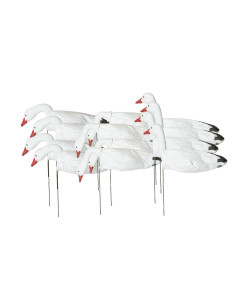
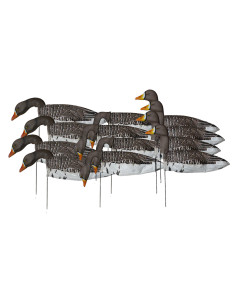
12 Pack Fully Flocked Whitefront Goose Silhouette Decoys by Dakota Decoy Company
$149.99
Dakota Decoy Company

Waterfowl · Decoys
Duck floaters, full-body geese, motion and rigging — everything you need to build a spread that pulls them into the hole. Picked by hunters in Jonesboro, Arkansas.
Build Your Spread
Whether you're hunting flooded timber, a rice field at first light, or a big-water point, your decoys are the first thing birds judge. The right paint, the right body posture, and a little movement turn a circling flock into committed, feet-down birds.
Our waterfowl decoy lineup covers mallard and puddle-duck floaters, full-body and shell goose decoys, motion decoys, and the weights, line, and bags to rig and haul them. Use the filters below to narrow by species, style, and brand.
Dakota Decoy Company



Dakota Decoy Company


Before You Set Out
Straight answers on spread size, decoy styles, rigging and care from the DNW Outdoors crew.
It depends on where you hunt. In flooded timber or a small slough, a dozen to two dozen floaters plus a motion decoy is often plenty. Open water, big fields and late-season birds usually call for larger spreads of three dozen or more to stay visible and look like a safe, established flock.
Most field goose hunters run anywhere from two to six dozen. Early-season family groups can be fooled by smaller spreads, while late-season and pressured birds tend to respond better to larger, more realistic setups with a mix of feeders, rest and sentry postures.
Full-bodies offer the most realism and look great from every angle, but they take more room to haul. Shells stack tight and set up fast, making them ideal for adding numbers. Silhouettes are the lightest and most affordable way to bulk up a spread. Many hunters mix full-bodies up front with shells or silhouettes filling out the edges.
Mallards are the backbone of most spreads, but adding a few pintails, gadwall, wigeon or teal adds realism and visibility. Pintail drakes in particular show bright white that can be seen from a long distance. Match your mix to the birds using your area.
Regulations on motion and spinning-wing decoys vary by state, season and sometimes by specific public land. Always check the current waterfowl regulations from your state wildlife agency before you hunt. Jerk rigs and water-agitating decoys are a popular way to add movement where they are allowed.
A good rule of thumb is a line roughly one and a half to two times the water depth so decoys can swing naturally without dragging their weights. Wrap-style weights and adjustable lines make it easy to hunt shallow timber one day and deeper water the next.
Store them in mesh decoy bags or slotted bags so they dry and don't rub paint off each other. Keep them out of direct sun in the off-season, rinse off mud, and touch up worn paint before opening day. Flocked heads and bodies benefit from being kept dry between hunts.
Yes. Stop by DNW Outdoors at 1711 East Parker Rd in Jonesboro, Arkansas, or call 870-972-5827. Our team can help you plan a spread for your hunting style and get you rigged before the season.